
Global Engagement Lab
(GEL)
WHAT IS GEL?
The Global Engagement Lab is a 9-month training program for progressive funders and grant makers who have an interest in deepening their understanding of systemic change and systemic alternatives in grantmaking, as well as embarking on a journey of personal transformation with a cohort of others on a similar journey.
The program focuses on three key areas so far:


WHAT ARE THE GOALS
OF THE GEL

Deepen knowledge of the contours of systemic crises and explore movement responses to these crises.

Foster personal transformation and co-create tailored strategies to leverage shifts in participants’ organizations.
Explore what it means to be a “funder organizer” and advance systemic change across the field.
.

ABOUT GEL 6
Organizing Funders Toward
Systemic Change
SEPTEMBER 2026 – JUNE 2027
There is a growing tension inside philanthropy.
Many of us speak about justice, systems change, and solidarity, yet when conversations turn to power, capital, and risk, the ground becomes less steady. We sense the limits of traditional grantmaking, but changing institutional practice feels complex, political, and often personal. GEL 6 is for funders who recognize that tension and want to work through it collectively.
The Global Engagement Lab 6 is a nine-month learning journey for progressive funders and grantmakers who want to move beyond values alignment and toward organized strategic action. This is not a technical training on improving grant processes. It is a space to examine philanthropy itself as a site of power and to explore what it would mean to organize from within it.
SPECIFICALLY, GEL 6
AIMS TO :
Support funders to reimagine their role as active agents of change within philanthropy, capable of organizing internally and collectively to shift institutional and sectoral practices.
Build the knowledge, skills, and political clarity needed to engage with power, capital, and narrative as central terrains of systems change.
Strengthen participants’ ability to apply organizing principles at the personal, organizational, and systemic levels, recognizing the interconnectedness of individuals and communities across global contexts.
Move beyond values alignment and technical grantmaking toward sustained, strategic practices
that link values to action and support long-term movement-led change.

WHAT YOU WILL EXPLORE
GEL 6 is designed as a cohort journey grounded in four interconnected areas of inquiry.

Personal Thresholds and Political Clarity
We begin with the individual, not for introspection alone, but because institutional change is shaped by personal thresholds. Participants reflect on their relationship to power, their motivations, and the tensions they navigate within their institutions, considering what they are willing to risk, what feels non-negotiable, and how comfort, fear, or loyalty influence decision-making. This reflection is grounded in political context and connected to practice.In this way, the personal becomes a site of clarity and action, strengthening participants’ ability to navigate complexity and organize within their institutions.

Funder Organizing
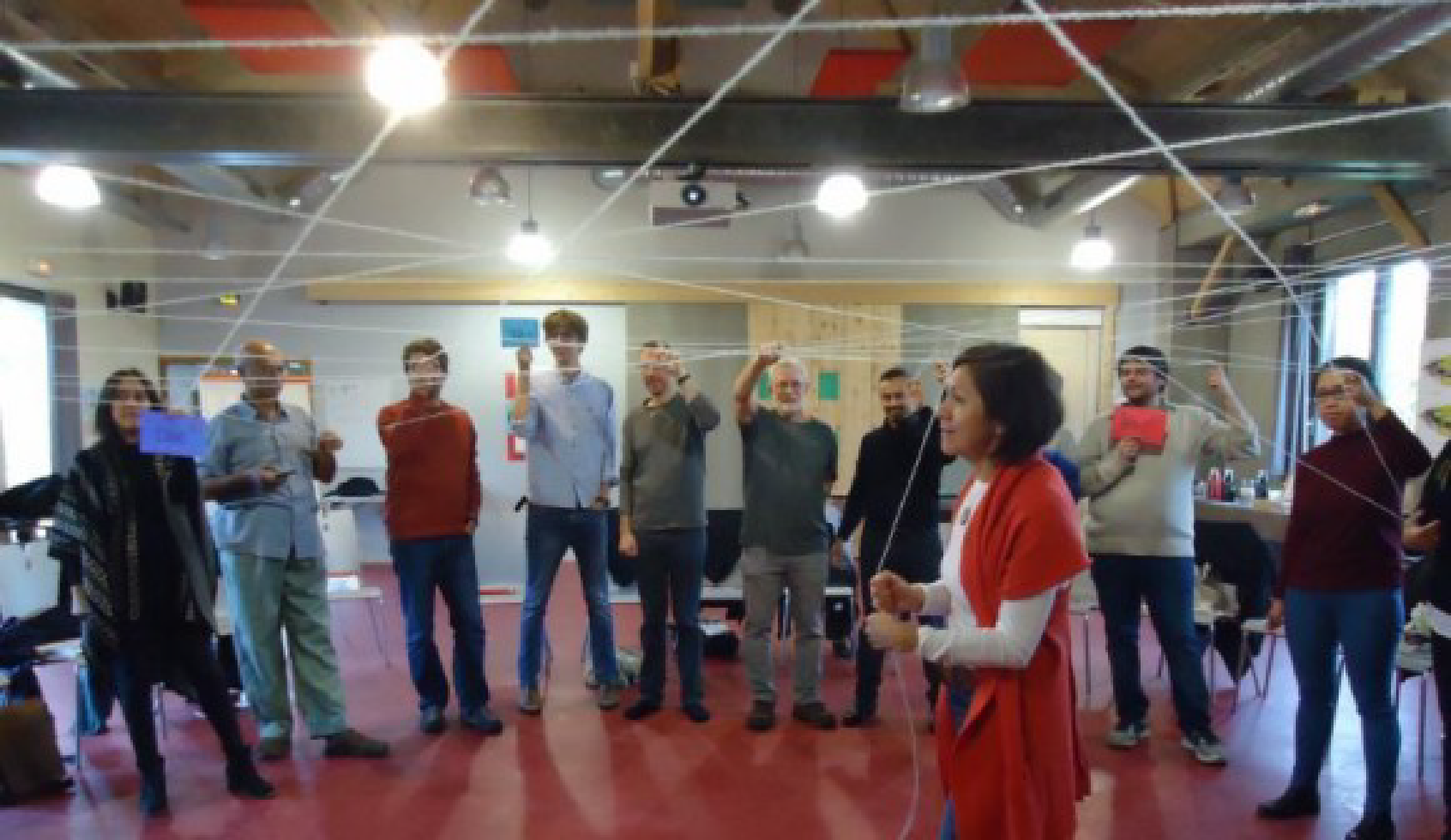
Rather than seeing ourselves only as supporters of movements, we explore what it means to act as organizers within philanthropy. Participants engage organizing principles such as base building, shared analysis, collective strategy, and long term power building, and consider how these practices might be applied inside foundations and across networks. Participants will listen and learn from invited speakers as well as their peers. They will get to experiment with how to apply new tools and tactics to their own work.

Systems Change, Capital and Narrative
GEL 6 will examine money and narrative as terrains of struggle, drawing from movement campaigns and strategies to better understand how capital can be organized, not simply distributed. Participants will touch on divestment strategies as an organizing approach to align values with practice. Participants will explore what is possible within their individual institutions and spend time thinking of the short, medium and long term.

Time, Discipline and Resilience
This program will not romanticize organizing or claim that within 9-months participants will come out with a sector-wide campaign that will topple the section…we are much humbler than that!
Participants will be invited to reflect on endurance and the ebbs and flows of organizing. There will be room to reflect on long term strategy, institutional memory, leadership development, and collective care; recognizing that transformation requires discipline over time
PEDAGOCICAL
APPROACH
GEL 6 is built on the understanding that personal, collective, and systemic transformation are interconnected and mutually reinforcing.
Reflective practice is embedded throughout the program, alongside applied systems and power analysis. Participants are supported to integrate learning across levels, develop strategies responsive to real-world constraints, and work through challenges collectively.
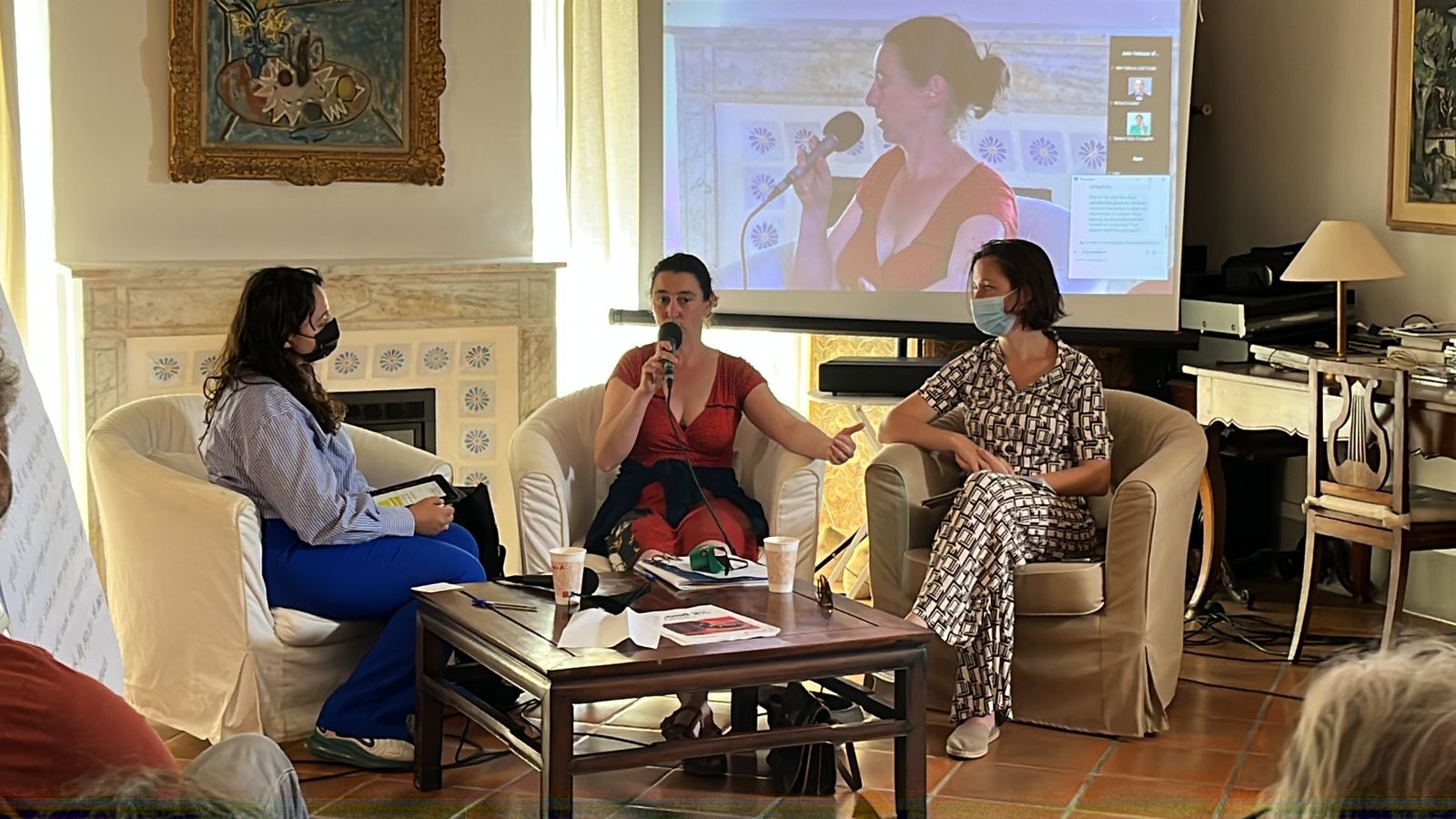
The GEL cohort functions as a supportive and rigorous learning space where participants are expected to engage deeply, share experiences, and learn from one another, as well as from movement practitioners. This collective inquiry is central to developing the clarity, discipline, and solidarity required for long-term systemic change.
IN RELATIONSHIP
WITH OTHERS
GEL exists within a broader ecosystem of funder organizing and political education spaces. We are not alone in this work, and we do not see it as a marketplace of competition. There are programs such as the Justice Funders Funder Organizing Institute and the Thousand Currents Academy that also support funders in deepening political alignment and accountability to movements. We respect and learn from these efforts.
Rather than competing, we see these spaces as complementary. Participants often benefit from engaging in more than one political education space
over the course of their careers. We encourage funders to find the space that resonates most with their context and readiness.

WHAT MAKES GEL DISTINCT
GEL 6 offers a politically grounded learning space that treats philanthropy itself as a site of organizing.
Participants leave with:

Greater clarity about their personal leverage and limits
Practical insights into applying organizing principles within philanthropic institutions
Exposure to movement strategies rarely discussed candidly in funder spaces
A shared analytical framework for long-term alignment and sector-wide influence
GEL 6 is designed for funders who understand that supporting justice requires more than funding good work. It requires a willingness to be changed by the movements philanthropy hopes to support.
GENERAL STRUCTURE of Gel 6 (2026-2027)

In person
retreat I:
Will be held in September in Mexico either week of September 7th, week of September 14th or week of September 21st.
Workshops
online:
On selected topics relevant to the curriculum and participants
Monthly
cohort check ins:
For community building, and Space for cohorts to ideate, share experiences, learnings & challenges
In person
retreat II:
Will be held in 2027 (exact time
and location TBC)
Please note that some activities might not be listed and might be added later, this is a general overview of key areas of work and roughly when they will be.Details may vary when work starts and can be shaped by participants.
March – April
Applications open
May
Cohort finalized
June
Welcome get to know each other virtual meeting
July
Coordination for retreat travel |Virtual check-in: others more deeply
August
Coordination for retreat travel | Agenda walk-through with cohort on zoom
September
First retreat in Mexico
October
Virtual Workshop 1
November
End of Year virtual check-in
January
Virtual Workshop 2
February
Coordination for retreat travel
March
Virtual Workshop 3
April
Coordination for retreat travel |Agenda walk through with cohorton zoom
May
Retreat 2 in either Morocco, Senegal or Kenya | EDGE Conference
June
Closing virtual reflections and next steps for the cohort engagement through EDGE
Virtual meetings will be scheduled at 2pm UTC

Solidarity Discounted Rate: $3,500
This is for EDGE members with an annual budget of under US$1 million
Full Cost: $5,000
This is for EDGE members with an annual budget above US$1-2 million.
Redistribution Rate: $6,500
This is for EDGE members with an annual budget above US$2 million.
Fees cover all expenses excluding flights.
Solidarity Discounted Rate: $4,000
This is for organizations with an annual budget of under US$1 million
Full Cost: $5,500
This is for EDGE members with an annual budget above US$1-2 million.
Redistribution Rate: $7,000
This is for EDGE members with an annual budget above US$2 million.
Fees cover all expenses excluding flights.
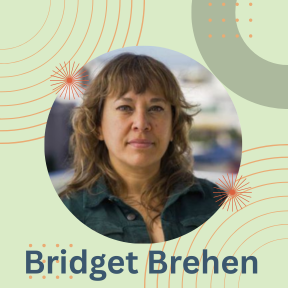
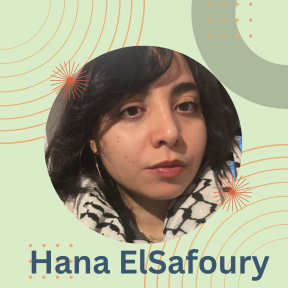
The program will be facilitated by Bridget Brehen and Hana ElSafoury, and will feature guest speakers from a range of global movements and philanthropic organizations. Additional speakers will be announced soon.
PREVIOUS PARTICIPANTS
Previous GEL participants represented a wide range of philanthropic organizations including:

Young Feminist Fund
WP Fund
Women’s Fund Georgia
WhyHunger
WeGrand
W.K. Kellogg Foundation
Voqal
University of London
Unitarian Universalist Service Committee (UUSC)
Trust Africa (USW Canada)
True Costs Initiative
Thousand Currents
Steelworkers Humanity Fund (USW Canada)
Social Venture Partners International
Sivil Toplum Destek
SDM Netherlands
Rockefeller Brothers Fund (RBF)
Robert Bosch Stiftung
RIPESS
RAWA
Prototype Fund/Open Knowledge Foundation Germany
Proteus Fund
Prospera INWF
Philó Práticas Philantropicas + Movement for a Culture of Giving (Brazil)
People’s Support Froundation
Peace and Security Funders Group
Pacific Environment
Open Society Foundations
Newman’s Own Foundation
Neo Philanthropy
Movement for Black Lives (M4BL)
Mott Philanthropic
Mellon Foundation
Mama Cash
Lankelly Chase Foundation
Guerrilla Foundation
Kresge Foundation
Kindle Project
Hiland Capital
Hispanics in Philanthropy (HIP)
Grassroots International
Grassroots Global Justice Alliance
Global Greengrants Fund
GIFE
Fundo Direitos Humanos
Fundo Casa
Funder Learning and Action Co-Laboratory on Gender, Environment, and Climate Justice
Fundacion Solon
Fund for Global Human Rights
FRIDA The Young Feminist Fund
Foundation for a Just Society (FJS)
Ford Foundation
Fondation Terre Solidaire
Fenomenal Funds
FemFund Poland
European Cultural Foundation
Erneuerbare Freiheit
Dance Undercurrent
CS Fund
Cotyledon Fund
FAQ
What is the larger vision for organising GEL 6, and where does GEL fit within EDGE?
GEL 6 is grounded in EDGE Funders Alliance’s broader mission to support movements working to dismantle extractive funding systems and align resources with their priorities.
This work is guided by a long-term vision of a future beyond philanthropy, where resources are no longer controlled by philanthropic institutions but are held and directed by movements themselves. While this vision is ambitious and long-term, GEL 6 focuses on what can be done within a shorter timeframe.
The program supports participants to take concrete steps within their institutions, including shifting grantmaking practices, redistributing resources, and challenging extractive norms. These changes may be incremental, but are understood as part of a broader process of transformation, where short-term reform contributes to longer-term systemic change.
GEL 6 serves as both an entry point and an organizing formation within EDGE. It supports participants to begin practicing organizing within philanthropy by developing and testing strategies to shift power, resources, and decision-making in their own contexts.
The program does not aim to produce a single collective outcome. Instead, it centers individual and institutional change, while the cohort provides a space for shared learning, support, and exchange.
In this way, GEL 6 connects immediate, practical action with a broader, long-term effort to transform philanthropy and ultimately move beyond it.
What do you mean by ”personal” transformation or spending time on the ”personal”?
In GEL 6, personal transformation is not about self-improvement in isolation. It is about understanding how participants’ experiences, values, and positions within systems of power shape how they make decisions and act within their institutions.
Participants reflect on their relationship to power, what they are willing to risk or change, and the tensions they navigate in their work. This reflection is grounded in political context and directly connected to practice.
GEL 6 also recognizes the realities of burnout and pressure in the sector. Rather than separating care from the work, the program emphasizes practical forms of sustenance, including small, everyday practices of “micro-nourishment” that support continued engagement.
The goal is to strengthen clarity, alignment, and the ability to take action, making the personal a starting point for institutional and systemic change.
What makes the Global Engagement Lab unique?
“I’ve gained confidence, camaraderie, frameworks, resources, and support, which have already shifted my approach to my work, and have helped me open up really important conversations within my institution.” – GEL Participant
The GEL’s curriculum places emphasis on three tiers of transformation: personal, organizational, and field-wide transformations that are needed to enact a philanthropy for systemic change.
GEL focuses both on theoretical frames and concrete examples of systemic alternatives from around the world, combining intellectual/academic, political/historical and cultural/personal education with practical skills building.
It facilitates “deep dives” into Movement on the ground while experimenting with funding methods that meet the challenges of supporting systemic change.
The program does not aim to produce a single collective outcome. Instead, it centers individual and institutional change, while the cohort provides a space for shared learning, support, and exchange.
In this way, GEL 6 connects immediate, practical action with a broader, long-term effort to transform philanthropy and ultimately move beyond it.
What do I get out of participating in the Global Engagement Lab?
“I now have a new family — peers but also friends, who care about changing the system and understand how to support each other in doing it.” – GEL Participant
An opportunity to help inform EDGE’s strategies and programs, so we can better organize our wider philanthropic community.
A community! GEL graduates considently share that the community aspect of this program is what helps them to push their own edges as funder organizations both within their organizations and in the field.
Participation in two in-person retreats and virtual group work with a cohort of deeply engaged funder organizers, social movement partners and facilitators from around the world.
Opportunities to shape the future of systemic change philanthropy by curating content that will be widely disseminated to the field of philanthropy.
An invaluable inside exploration of organizing tactics, mentored by movement leaders and a community of like-minded colleagues to help you put your learnings into practice.
What exactly will I be committing to?
Two In-person Retreats
- Opening Retreat
- Closing Retreat
Virtual gatherings
- Monthly Check-ins
- Deep-dives with GEL advisor(s) and EDGE team
- Readings and resources
- Peer-to-peer support
Times for virtual meetings are usually at 2 pm UTC.
Outside of the retreats, cohort participants can expect to spend between 2-4 hours a month engaging with GEL programming.
GEL fees
Fees are discounted for EDGE members. If you would like to explore membership, reach out!
MEMBERS Solidarity Discounted Rate: $3,500 – This is for EDGE members with an annual budget of under US$1 million
MEMBERS Full Cost: $5,000 – This is for EDGE members with an annual budget above US$1-2 million.
MEMBERS Redistribution Rate: $6,500 – This is for EDGE members with an annual budget above US$2 million
NON-MEMBERS Solidarity Discounted Rate: $4,000 – This is for organizations with an annual budget of under US$1 million
NON-MEMBERS Full Cost: $5,500 – This is for organizations with an annual budget above US$1-2 million. NON-MEMBERS Redistribution Rate: $7,000– This is for organizations with an annual budget above US$2 million
Fees cover all expenses excluding flights.
What is the participant journey you are hoping for in GEL 6
Participants enter GEL6 with a concrete challenge or tension within their institution. Early in the program, they are supported in naming and situating this challenge within broader systems of power.
As the program progresses, they develop strategies to address it, drawing on organizing frameworks, peer learning, and movement insights.
Over time, participants begin to test and refine these approaches within their institutions.
By the end of the program, participants leave with greater clarity, a stronger sense of their role, and concrete shifts underway in their context.
GEL Participant
I have met some really great people that I have managed to meaningfully connect with. And I have started thinking about the issues that I did not give thought to previously
GEL Participant
It has been very meaningful to connect with like-minded funders across different parts of the world and backgrounds.It has felt validating to have so much synergy
GEL Participant
My participation in the GEL has had a profound impact on me both professionally and personally. I left the GEL feeling like I (finally!) found ‘my people’ in philanthropy. I now have a global network of peers, friends and comrades working in the crazy and mixed-up world of philanthropy that I can lean on for advice, perspective and support. The GEL left me feeling supported and empowered to push forward with making tangible changes within my own foundation and the way we work that I otherwise would have felt unable to approach on my own.
GEL Participant
It was so powerful to tackle anti-blackness from an international lens. I was especially moved by what emerged when space was made for people to name Black victims of (state) violence outside the US. We need to situate Black liberation as the key to all our liberation *globally*. The phrase ”England created white supremacy, the US perfected it” is still clanging around in my head.
GEL Participant
“I am learning so much from listening to others. I am not often in spaces where funders are talking about their work in such honest, deep and radical ways, and I am deeply appreciative of the opportunity to be in this space with these people”
GEL Participant
”The first thing I say when people ask me about the program is that it was truly transformative! It has been so powerful to “find my people” and to know that they have my back (and I theirs) as we collectively engage in this challenging work. I’ve gained confidence, camaraderie, frameworks, resources, and support, which have already shifted my approach to my work and have helped me open up really important conversations within my institution. It remains to be seen where this will lead for my Foundation, but it feels radical to have even begun to ask questions, the first step in the journey of systemic change.”